Metabolic Scales (version 2) University of Queensland Art Museum
(2025)
- Exhibition Dates
- 18 February – 14 June, 2025
- Venue
- University of Queensland Museum of Art
- Exhibition
- These Entanglements: Art after Ecology
- Artists
- Alicia Frankovich, Caitlin Franzmann, Norton Fredericks, John Gerrard, Simryn Gill, Gabriella Hirst, Angelica Mesiti, Betty Muffler and Maringka Burton, Open Spatial Workshop (Terri Bird, Bianca Hester, Scott Mitchell), Alexandra Pirici, Susan Schuppli, Yasmin Smith, James Tylor.
- Curated
- Anna Briers
Curatorial Assistance Kyle Weiss - Associated Material
- These Entanglements Media Kit
Recording about the work
Metabolic Scales: online reading group
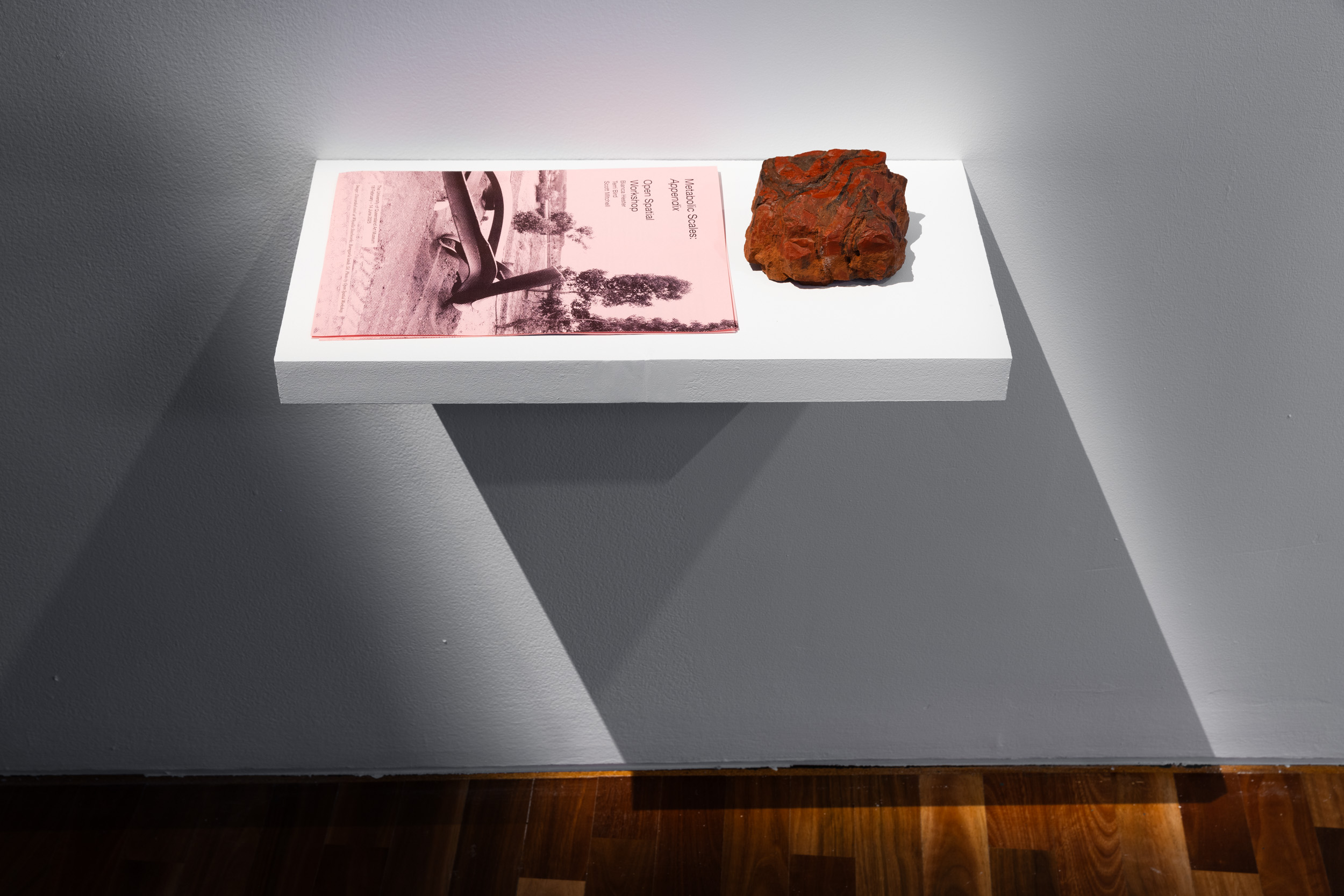
Metabolic Scales: Appendix, by Open Spatial Workshop - Photography
- Joe Ruckli
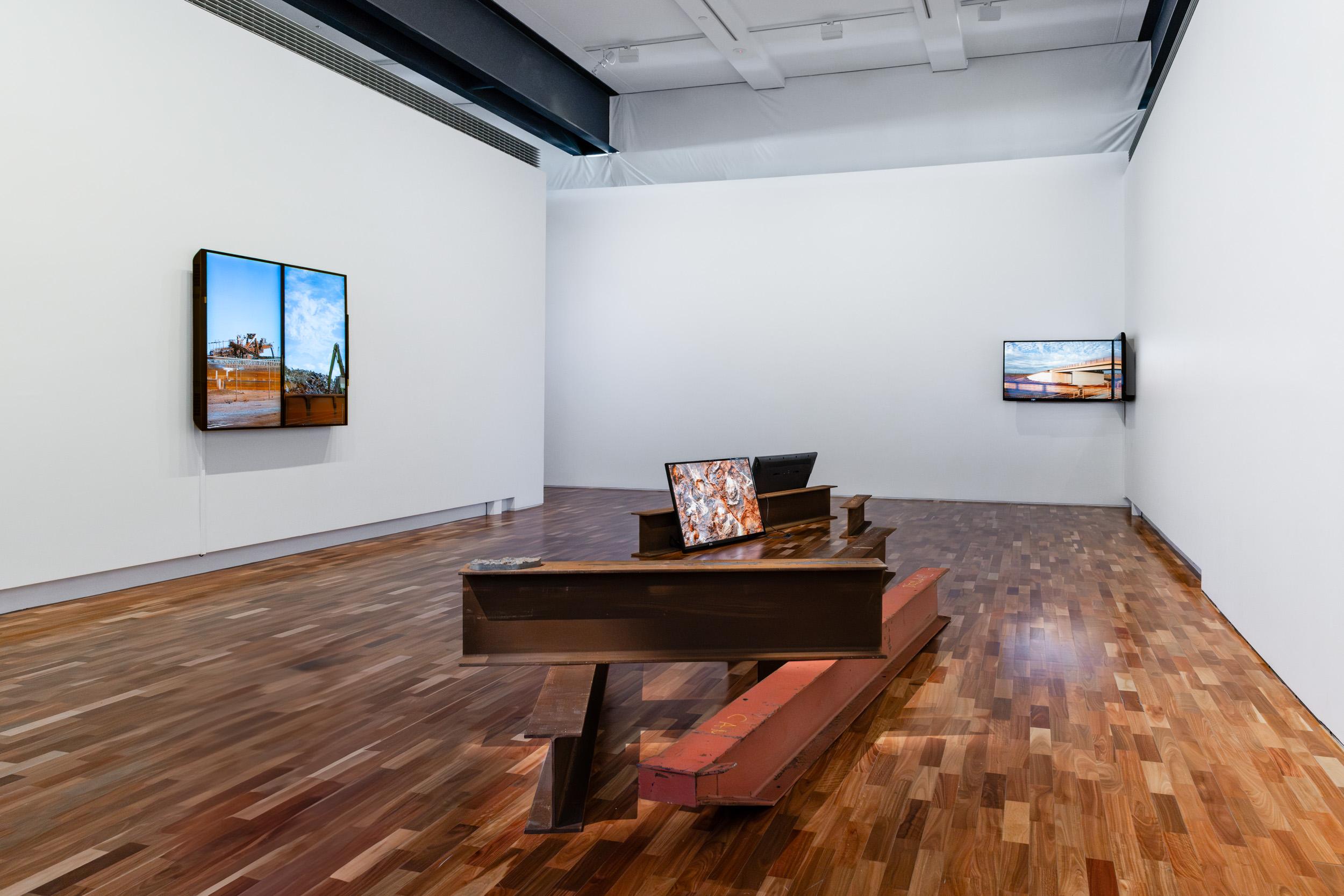
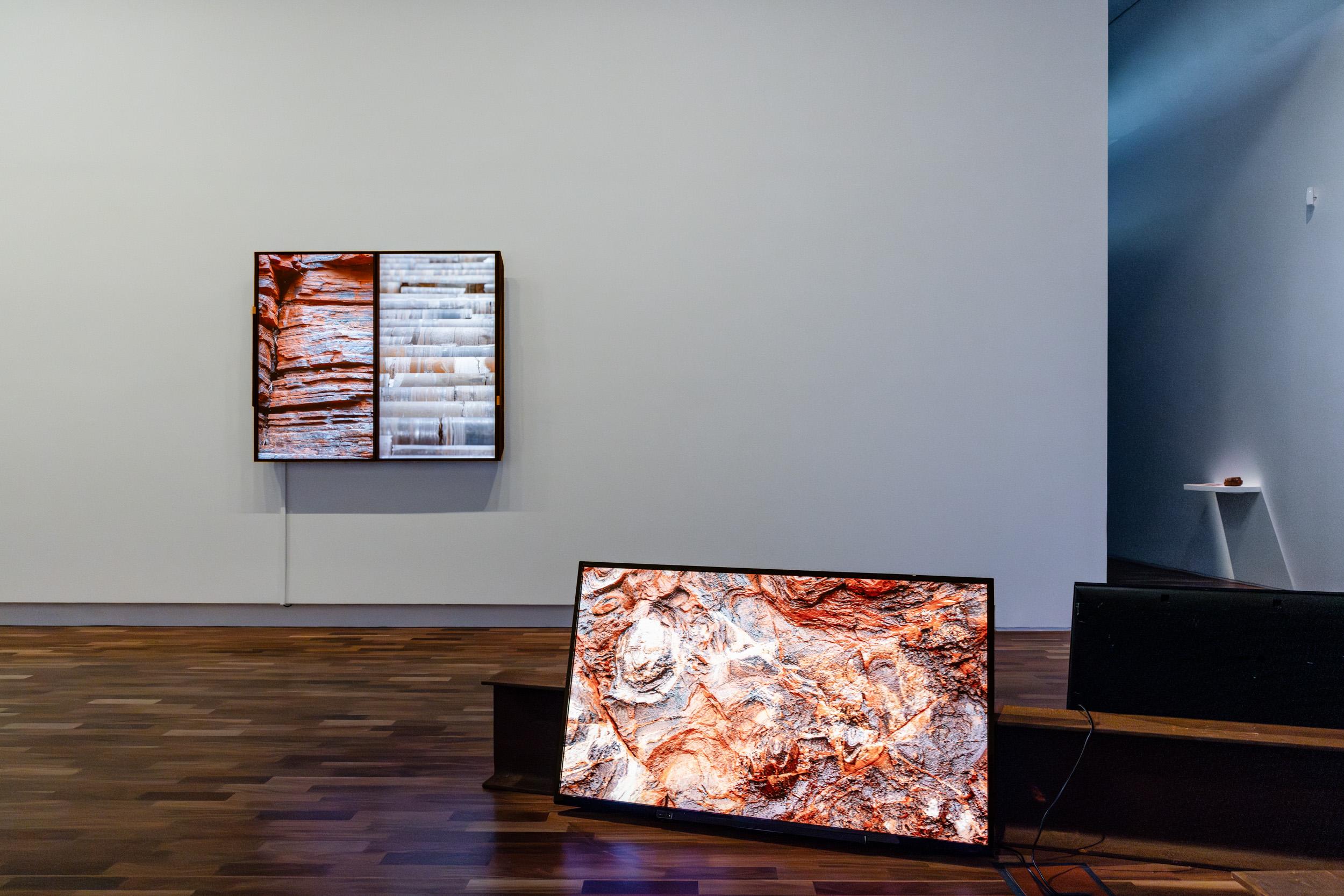
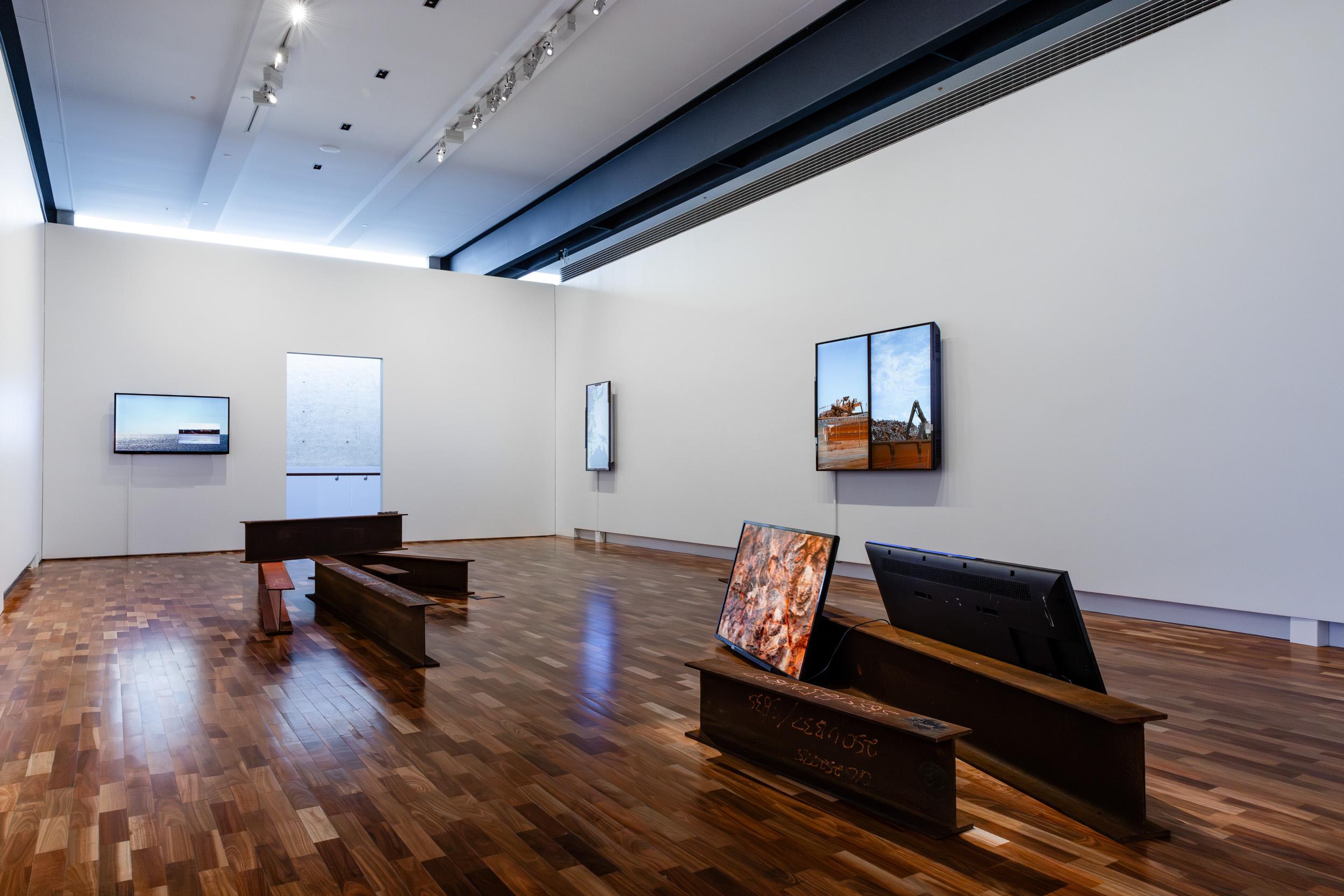
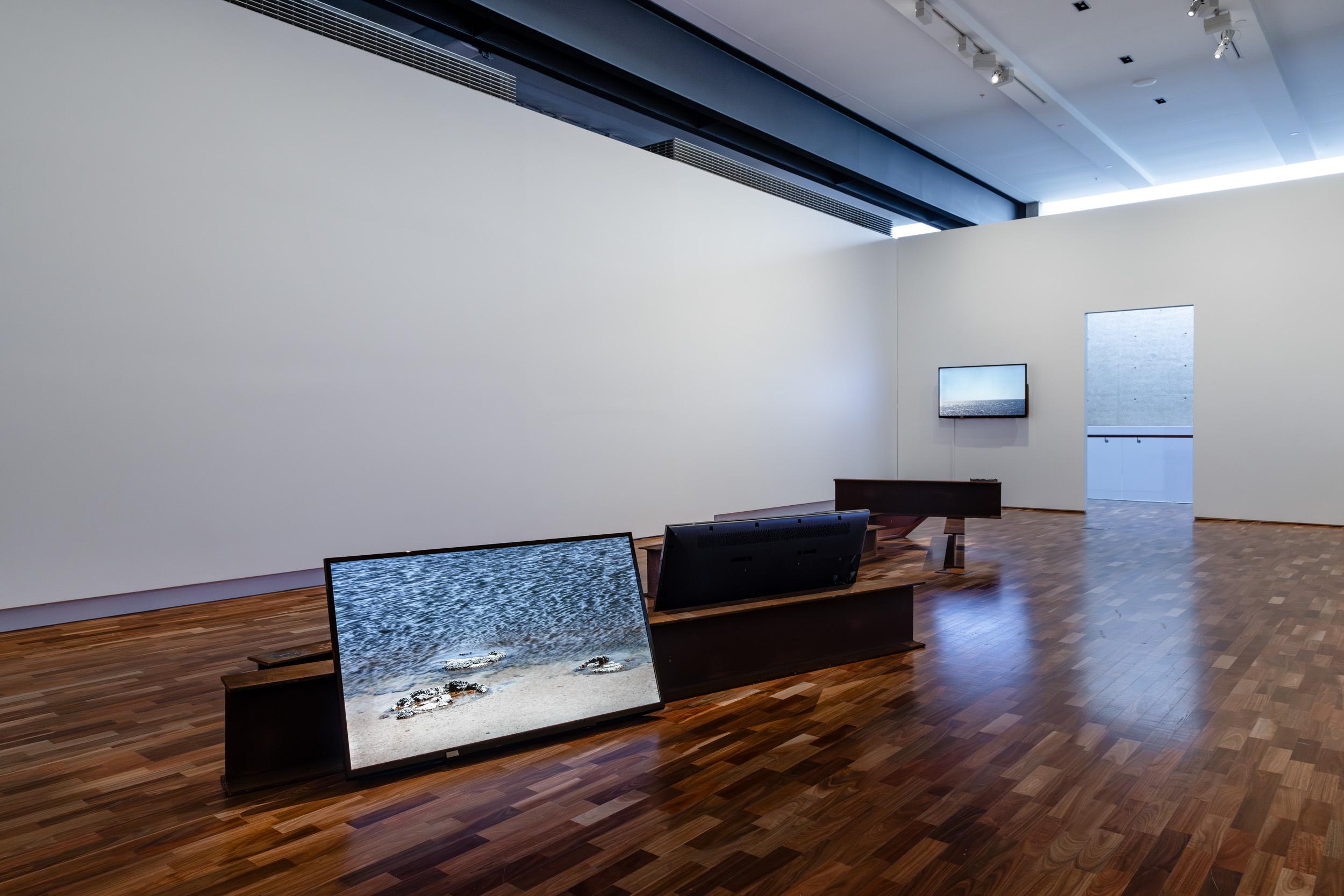
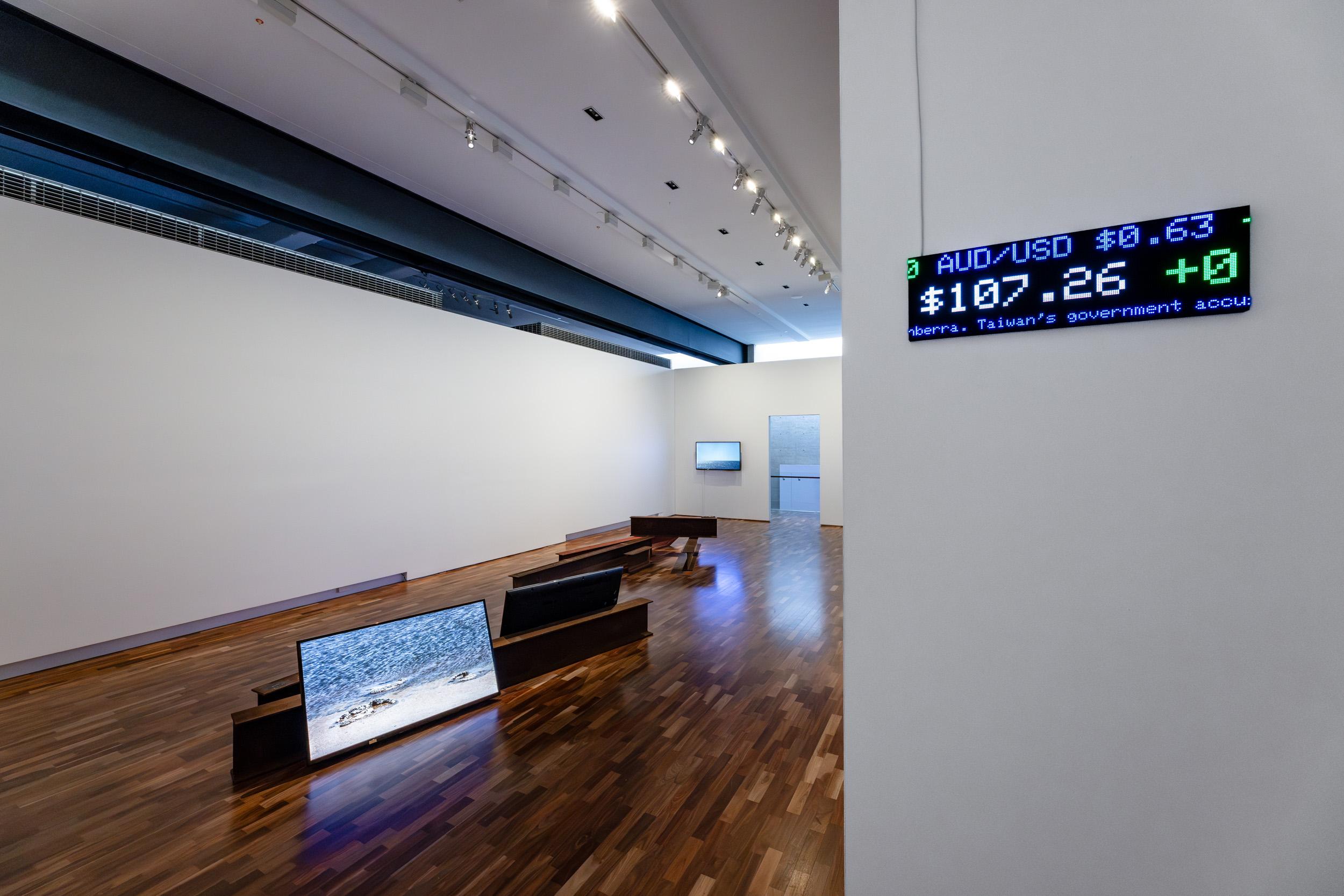
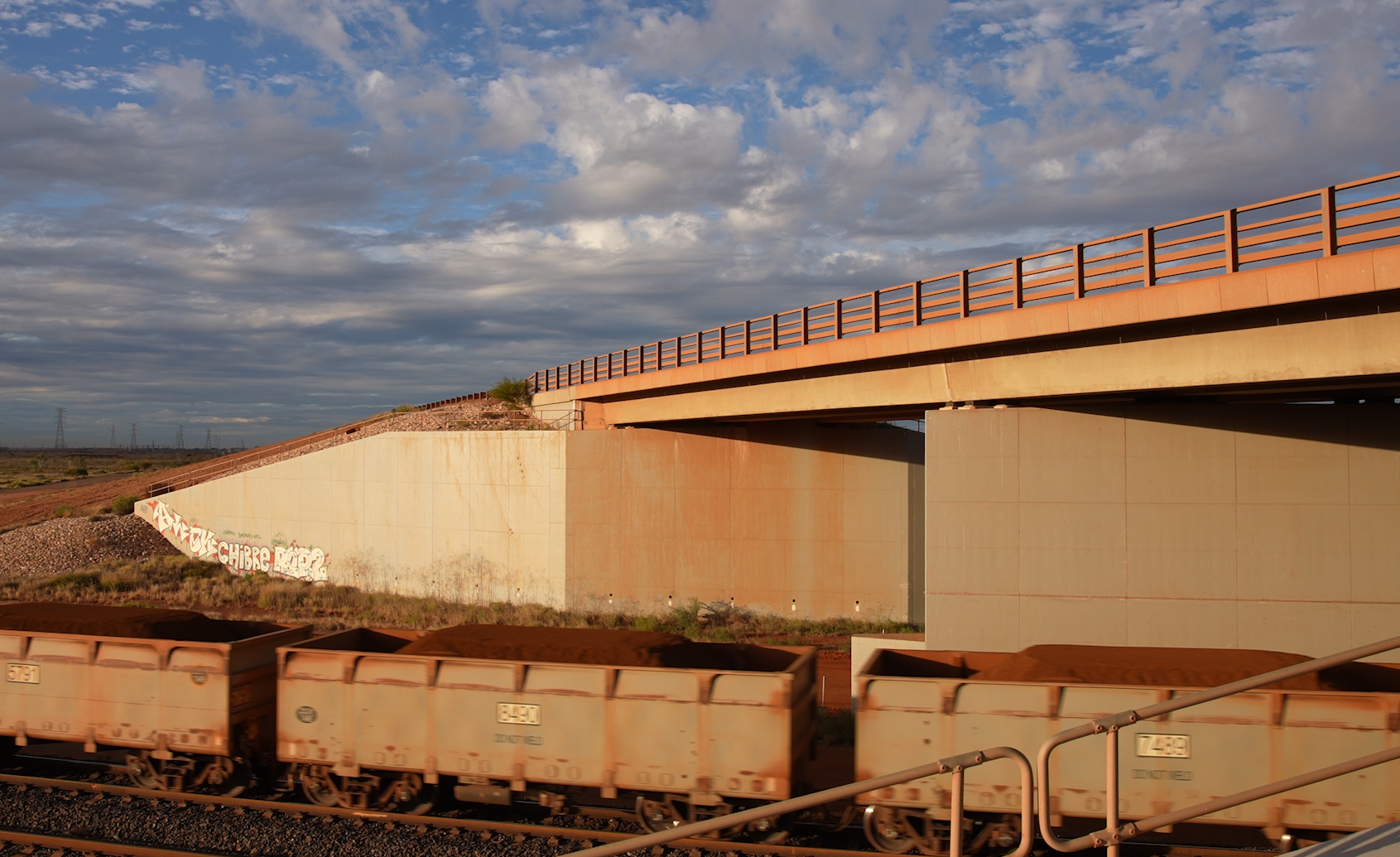
Metabolic Scales by Open Spatial Workshop explores metabolism and extinction in relation to unbounded consumption of resources. Based on research and fieldwork in the Pilbara, Western Australia on the lands of Nyamal and Kariyarra custodians, the work is a new commission by Open Spatial Workshop, an artist collective that examines biological, geological, and social entanglements.
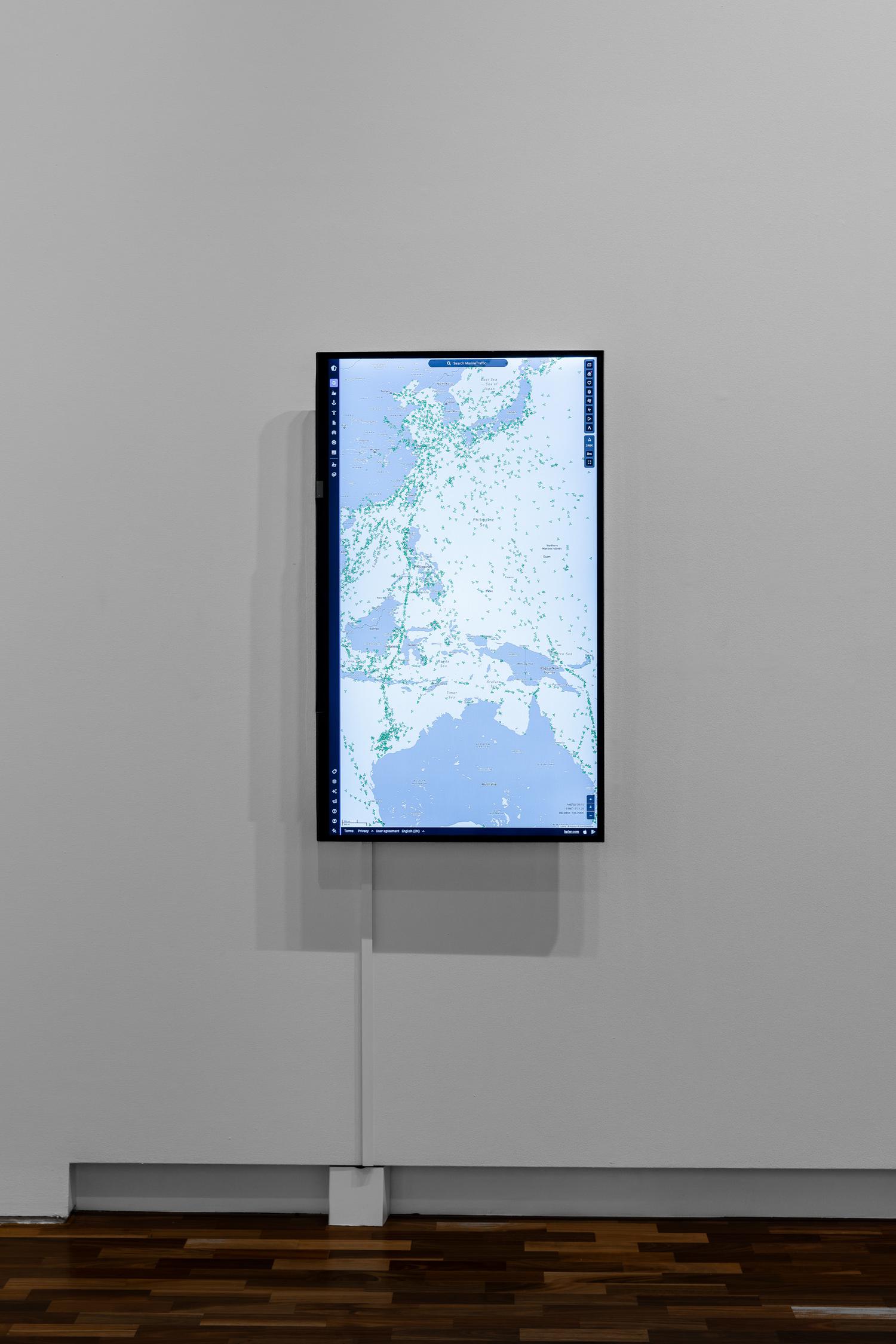
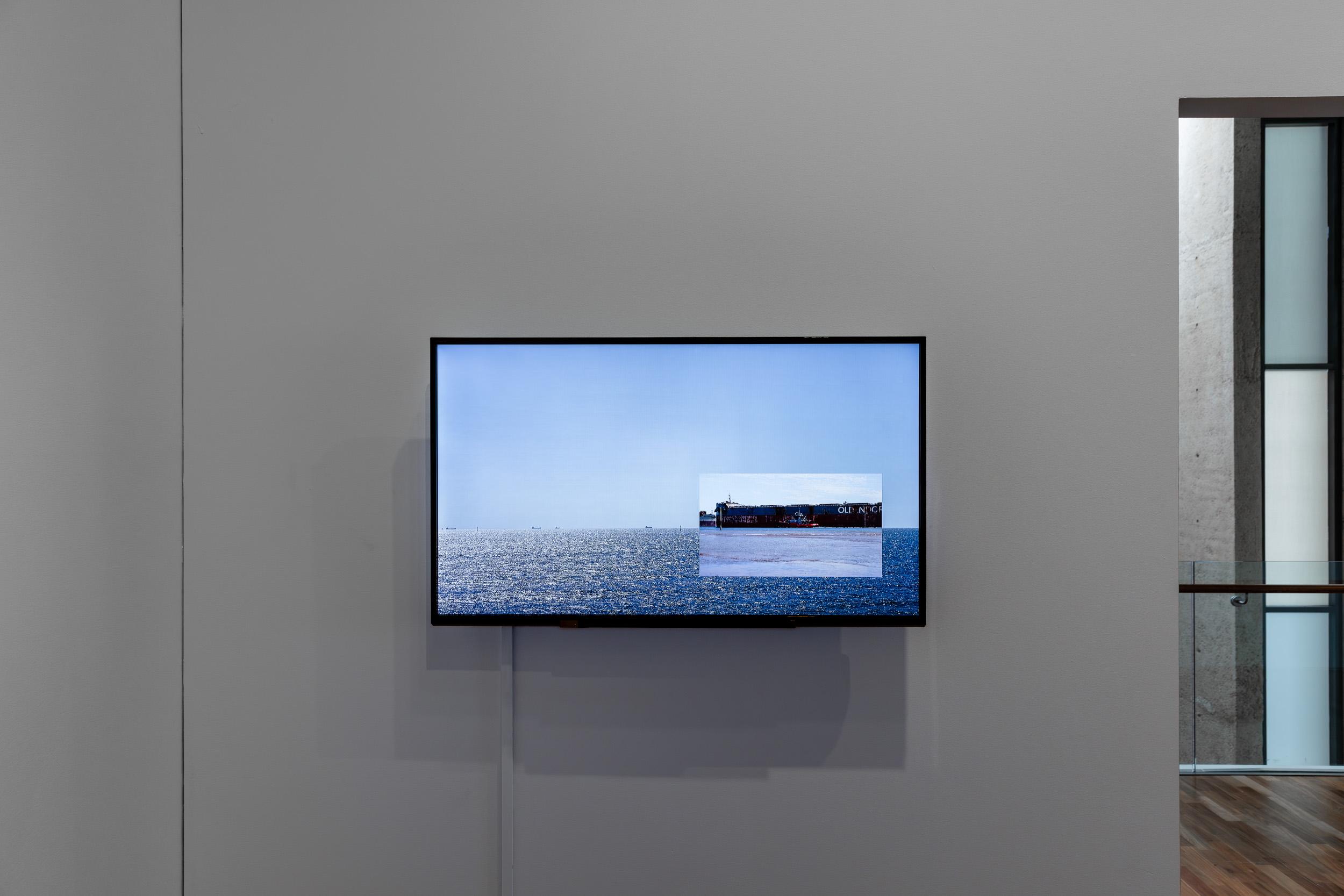
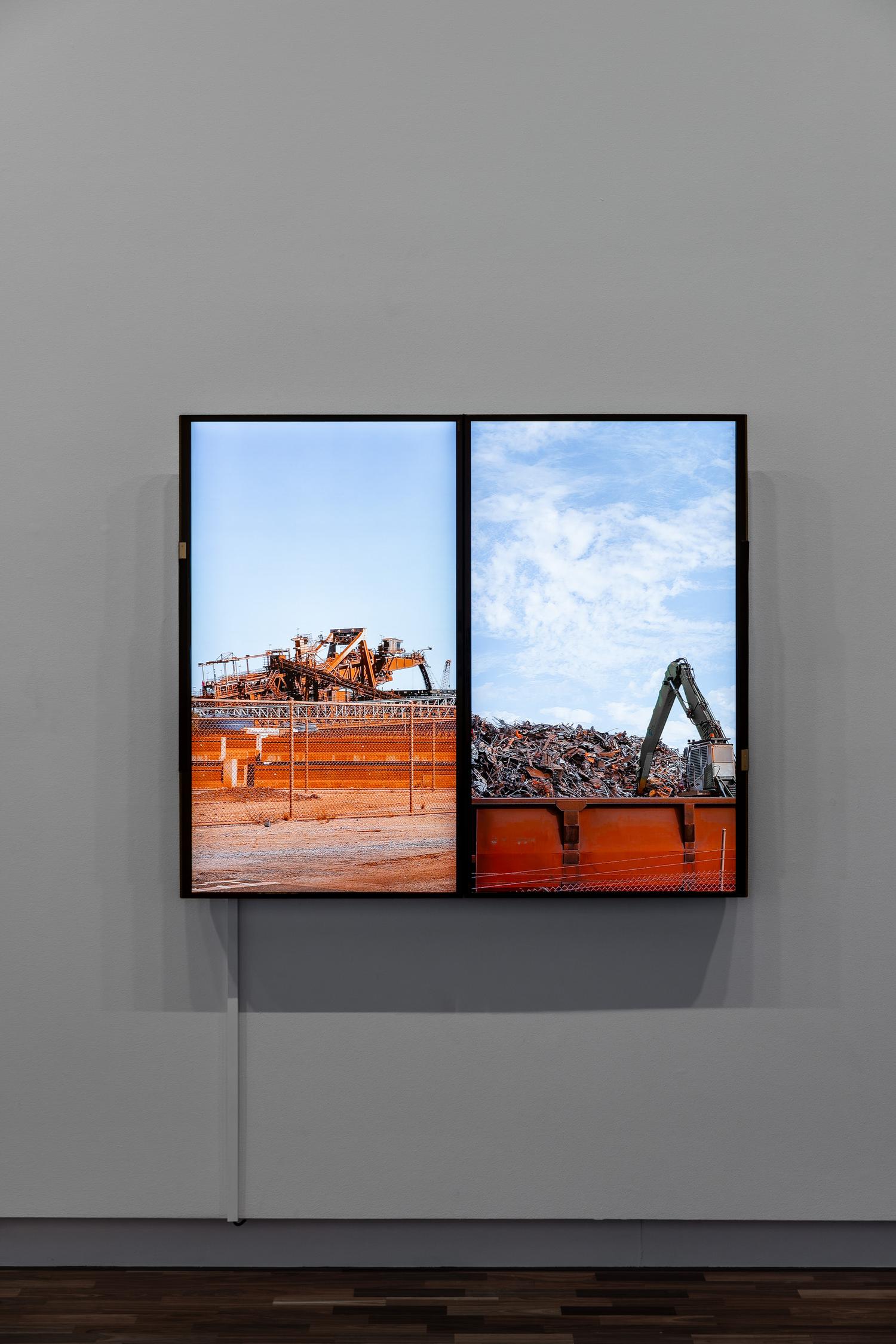
Metabolic Scales follows multiple material flows from the earliest forms of microbial life to the extraction of iron ore, and the circulation of this mineral on the global market. The physical movements of iron ore are captured through video footage and live vessel tracking data: from its mining in the Hamersley Ranges to its export as one of Australia’s most significant mineral resources, traded across global shipping routes and transformed into steel for nation building and consumer consumption. The capital circulation of iron ore’s value on the global financial markets is indexed through live data on a nearby LED screen.
Derived from Banded Iron Formations, iron ore owes its geological origins to a biological one—cyanobacteria—a microorganism pivotal in the origins of life. Cyanobacteria are regarded as the most successful organism on Earth.
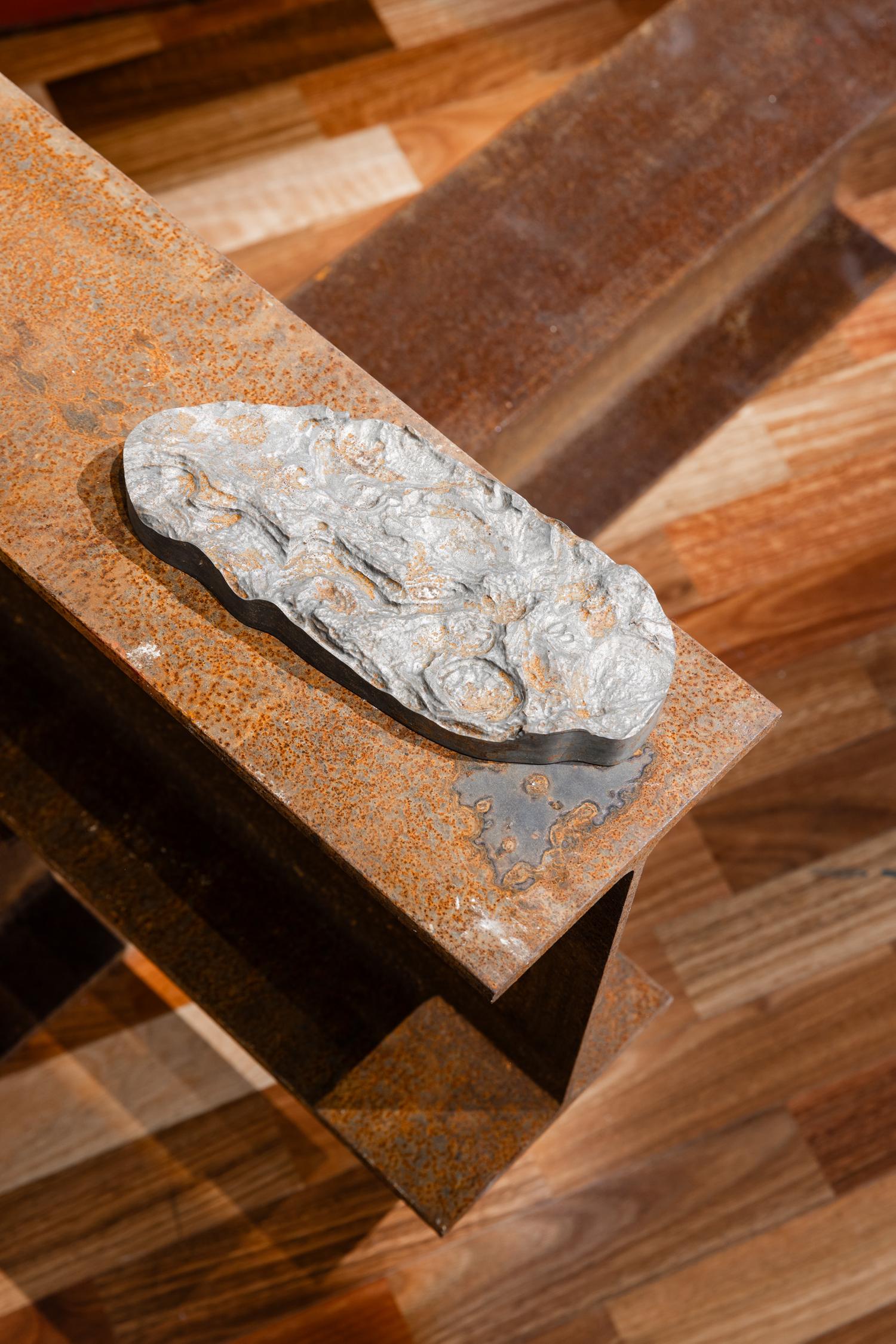
They developed a metabolism that obtained energy through photosynthesis, releasing oxygen as a by-product, and paving the way for the gradual transformation of Earth’s atmosphere and the evolution of more complex oxygen-dependent life forms. A record of this transformation is registered in the stromatolites fossils in the Pilbara. Today, cyanobacteria are found as symbionts with other interdependent life like fungi, lichens, corals, as well as in the human body as radical feminist cellular biologist Lynn Margulis taught us. A milled reproduction of a stromatolite fossil is included in this installation. Formed by communities of cyanobacteria, stromatolites are biogenic structures created through the interaction of biological and geological processes, blurring the boundaries between life and non-life.
Cyanobacteria were responsible for both the origins of life as we know it and one of the first significant extinction episodes during the ‘Great Oxygenation Event’, which also produced the Banded Iron Formations. By referencing past climate crises Open Spatial Workshop offers ways of considering our rapidly collapsing future in relation to Earth’s deep material histories.
CURATORIAL STATEMENT
Petroleum, chemicals, and bacteria have become agents of history. Humanity, or rather the settler-colonial project, has infiltrated every environment on a molecular level, resulting in anthropogenic climate crisis. In this state of ‘post-nature’ there are no edges; even plastic has invaded our blood streams.
These Entanglements: Ecology After Nature thinks with the molecular, the geological and the biological and their entanglements with social relations. Bringing together Australian and international artists it traverses choreography, sculptural installation, filmmaking, field research, tarot reading, photography, painting, and virtual simulation. Working from the premise that human exceptionalism has led to environmental catastrophe, the exhibition proposes a more ethical, symbiotic, and reciprocal approach to cross-species relations and ways of being in the world.